(310) 228-8284
Home / Blog / Patios & Covers
Patios & Covers · September 25, 2025 · The J Hammer Team

Paver Patio vs. Wood Deck vs. Concrete: Choosing Your Outdoor Floor

Comparing the three main patio surfaces for LA backyards — longevity, maintenance, heat, cost logic and which fits your yard’s grade and style.

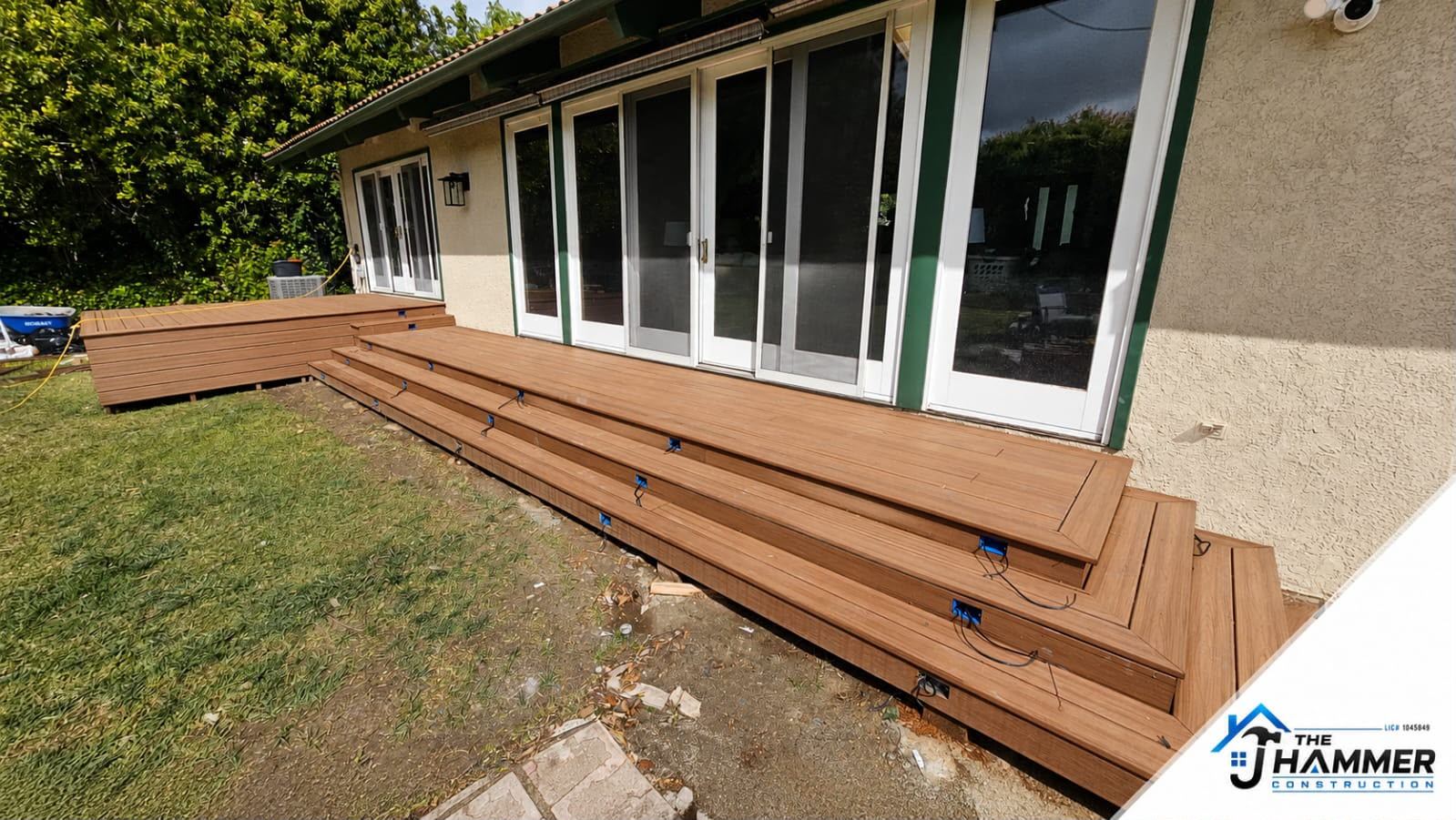
Paver Patio vs. Wood Deck vs. Concrete: Choosing Your Outdoor Floor — The J Hammer Inc project photo

Every backyard renovation starts with the same structural question: what should the floor be? In Southern California the serious contenders are pavers, wood (or composite) decking, and poured concrete. Each has a right answer — depending on your grade, your style and your appetite for maintenance.

Interlocking pavers: the long-game favorite

  • Longevity: decades, with individual units replaceable at any time. The system flexes with soil movement instead of cracking.
  • Maintenance: blow it off, rinse it, top up joint sand every few years.
  • Heat and comfort: lighter blends stay reasonable underfoot; textured surfaces grip when wet — a real factor near pools.
  • Design range: the widest — patterns, borders, banding, multiple formats.
  • Best when: your patio is at or near grade and you want the yard to look built, not poured.

Wood and composite decks: the elevation solvers

Decks earn their keep where the ground doesn’t cooperate: raised floor levels, slopes, and multi-level yards. A curved composite deck stepping down from the house to a fire pit — a project type we love building — turns a grade problem into the yard’s best feature.

  • Longevity: composite boards resist rot and termites and skip the refinishing treadmill; the structure beneath is engineered lumber that must be built right.
  • Maintenance: composite needs washing; real wood needs staining/sealing on a recurring schedule — be honest about whether you’ll do it.
  • Heat: composite runs warm in full sun (darker colors especially). Shade planning matters.
  • Best when: the floor needs to be above grade, or the design calls for warmth and curves that stone can’t deliver.

Poured concrete: the budget baseline

  • Longevity: good — with an asterisk shaped like a crack. Control joints decide where, not whether.
  • Maintenance: minimal until repairs, which never blend.
  • Design: broom finish is honest and affordable; stamped and colored finishes chase the paver look at a lower price but keep concrete’s cracking and patching behavior.
  • Best when: budget leads, the area is utilitarian (side yards, pads), or a clean modern monolith suits the architecture.

The decision in three questions

  • Is the surface at grade? At grade → pavers or concrete. Above grade → deck.
  • How long will you own the home? 10+ years favors pavers’ repairability; short horizons widen concrete’s case.
  • What does the house want? Spanish and ranch homes love paver warmth; hillside moderns love floating decks; minimalist builds wear concrete well.

Mixed answers? Mix surfaces — a paver dining terrace flowing to a composite lounge deck is a combination we build often, and the contrast is the design. Bring us your yard’s photos and levels, and we’ll tell you which floor (or combination) it’s asking for.

Licensed & insured · LIC #1045849Get a free estimate for your project
Keep reading

Related guides

Ready when you are

Let's talk about
your project.

(310) 228-8284